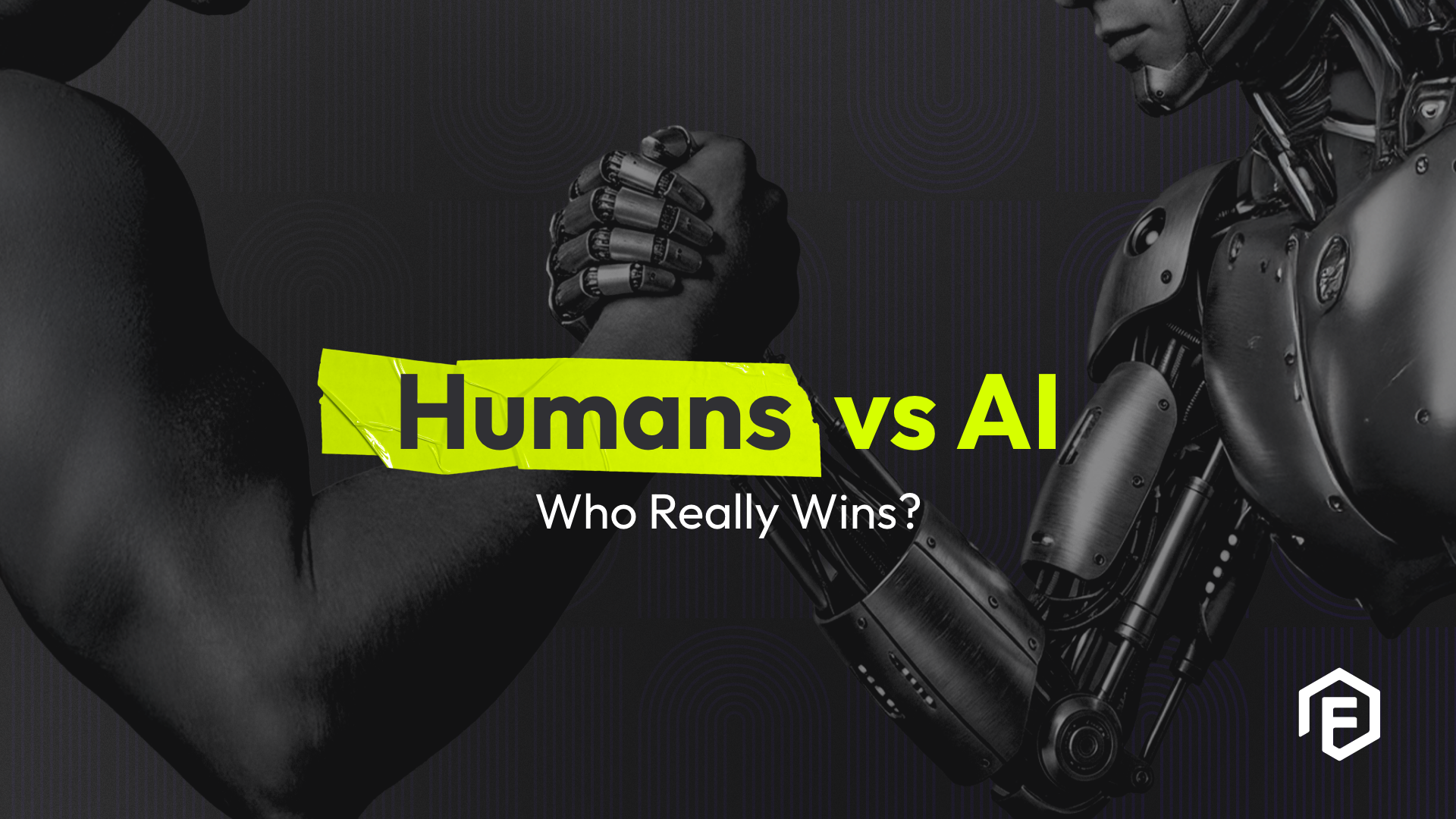
A decade ago, AI wasn’t a thing – at least, not as we know it today. A few years following that, it was introduced to the public. Now, cut to the present day, and AI has fully integrated into our lives. And for some people? It has become a legit search engine. It writes emails, summarises meetings, drafts strategy decks, generates code, edits photos, predicts customer behaviour, and even helps pilots land planes. Yes, you heard right: it helps pilots land planes! And while the topic often swings between “AI will replace us all one day” to “AI is just another tool to make life easier”, the truth really sits somewhere in the middle.
The most useful way to think about AI isn’t as a replacement, or even as an assistant, but your very own co-pilot.
We know that a co-pilot doesn’t fly the plane all by themselves. They don’t make every decision, and they definitely don’t ignore the person chilling in the captain’s seat. Instead, the heavy lifting is handled, systems are monitored, and surface insights are handled, while the captain stays accountable for where the journey is headed. In that way, they only need to take the wheel when things get real. (For the millennials reading this, we just mean when things get intense.)
That’s exactly the relationship we should be building with AI.
Though, think about it – the real question isn’t about whether to use AI, but when to let AI lead, and when to take back control.
Be The Captain, Let AI Work as the Co-Pilot
Let’s be honest, AI is simply incredibly good at certain things. Almost unfairly good, making you question your own abilities. Artificial Intelligence processes massive amounts of data like it’s nothing, spots patterns that humans would miss if we’re not paying attention, stays consistent without getting tired or distracted from our demanding prompts, and handles repetitive tasks without ever complaining. That makes it the perfect tool to take the pressure off humans (we can’t believe we’ve actually hit the era of humans and artificial intelligence, what a time). But it also has very real limitations.
AI doesn’t understand context the way that people do. It doesn’t have lived experience, intuition, ethics, or gut instinct. It doesn’t know why something matters, unless you point it out and train it to recognise a pattern that looks like importance. And lucky for creatives out there in the world, it still struggles with creativity – the one thing that keeps us very much human.
But this is why AI works best alongside humans. When you place AI as your co-pilot, you avoid two dangerous aspects. The first being blind trust; where we adopt the mindset of “AI said it, so it has to be right”, which isn’t always the case. The other aspect is total rejection; the mindset of never wanting to use AI for things. Instead of either of these extremes, use collaboration to amplify the already good work you have.
When It Makes Sense to Let AI Take the Lead
There are instances where letting AI drive, with human supervision, is not only safe but really smart. Here are a few things to keep in mind, and where you can let it captain the ship temporarily.
1. The Repetitive, Time‑Consuming Tasks
If a task is predictable, rule‑based, and boring, AI is probably better at it than you are. It’s your choice whether to take this as something that is fortunate or unfortunate (well, unfortunate because something that arrived so recently is already that good). Things like summarising long documents, sorting emails, or support tickets, transcribing meetings, cleaning datasets, and creating first drafts. In this instance, AI leading doesn’t reduce quality at all, so you are good – it just frees up human time for work that actually needs thinking.
2. Data‑Heavy Pattern Recognition
We – as humans – are great storytellers. As a copywriter writing this, I know (source: just trust me, bro). And AI is great at numbers. When you’re dealing with market trends, user behaviour, risk signals, and performance anomalies – AI can surface insights far quicker than we humans ever could. The key is that humans still control and interpret the output. AI can say what is happening, and people decide what to do with the information.
3. Speed‑Critical Environments
In aviation, cybersecurity, fraud detection and system monitoring, speed matters. AI doesn’t hesitate or panic. It reacts instantly. That’s why AI co‑pilot systems are being tested in aircraft cockpits and military training – not to replace pilots, but to support faster, safer decisions when pressure is high.
4. Low‑Risk Decisions with Clear Rules
If the cost of being wrong is low, AI can drive the ship. This would be things like auto-replying to common customer queries, flagging potential errors, and suggesting the next steps based on known workflows. When rules are clear and when the stakes are low, AI autonomy makes perfect sense.
When Humans Need to Take Control: Captain My Captain
Now, let’s flip the situation and focus on when you should take over. There are moments where letting AI lead is a really bad idea, sometimes a dangerous one. Let’s talk about:
1. Ethical and Moral Decisions
AI doesn’t have values the way humans do – so any decision involving fairness, inclusion, safety, or human impact needs a human very much in charge. AI can provide options or insights, but it can never be the final authority. If something feels morally complicated, that’s your cue to take the controls.
2. High‑Stakes Outcomes
When decisions affect human lives, legal responsibility, reputation and long‑term strategy, you should let AI advise you, and not take what it says to you as the ultimate decision. This is why pilots, doctors, judges, and executives remain accountable even when AI systems support them. Responsibility doesn’t disappear just because a machine made a recommendation.
3. Unpredictable Situations
When something genuinely new happens – a crisis, cultural shift, unexpected behaviour – AI often struggles. Humans, on the other hand, can improvise, adapt, and reason through uncertainty.
This should tell you that AI is trained on the past, and humans live in the present.
4. Creative and Strategic Work
AI can remix ideas, and humans create meaning. Strategy, storytelling, brand direction, leadership, and creative vision all require nuance, emotion, and intuition. AI can support the process, but you shouldn’t let it own it.
The Real Risk: Over‑Trusting AI
One of the biggest dangers with modern AI isn’t that it fails, it’s that it sounds so confident even when it’s completely wrong. And of course, we have some people out there who believe it can always be right. Why? Because it’s AI – it’s supposed to be perfect. This is known as the AI trust paradox. As AI outputs become more fluent and human-like, people are more likely to trust them without questioning the underlying accuracy. Human oversight is not an option in this age – it is essential! If you wouldn’t hand full control to a junior colleague without supervision, you shouldn’t do it with AI either. Sorry, not sorry.
How to Build a Healthy Human‑AI Workflow
The best AI‑powered teams follow a few simple principles, so keep humans in the loop.
AI should always be explainable, interruptible, and overridable, so be clear on roles.
Decide upfront what AI leads, what humans lead, and where collaboration happens, so design for transparency.
If you don’t understand how an AI reached a conclusion, you shouldn’t act on it blindly, so treat AI as a learning partner.
The best results come when humans learn from AI insights, and AI improves through human feedback.
AI as a Co‑Pilot in the Real World
Across industries, the co‑pilot model is already taking shape. In aviation, AI systems support pilots with real‑time data while humans retain full control. In education, AI helps personalise feedback while teachers guide learning. In the workplace, AI handles admin and analysis so people can focus on thinking, creating, and leading. This isn’t about handing over control. It’s about sharing the workload.
Key Takeaways
AI isn’t here to replace humans. It is here to amplify human capability. When it’s used well, AI as a co-pilot makes work so much faster – and in all fairness, easier, smarter, and less exhausting. But it only works if humans stay engaged, sceptical, and accountable. Let AI be the captain where it’s strong: speed, scale, and structure. Take control where it matters most: judgement, ethics, and direction. The future isn’t just human or AI. It’s human and AI steering this ship together.
FAQs
What is a good control strategy in AI?
A good AI control strategy is systematic, causes progress (motion), and efficiently finds solutions, balancing exploration with exploitation using methods like informed search (e.g., A*, best-first), reinforcement learning (e.g., PID, MPC), or governance frameworks for responsible deployment, ensuring alignment with goals and managing risks without stifling innovation.
Why should AI be controlled?
AI needs control to mitigate risks like algorithmic bias, privacy violations, job displacement, and the creation of autonomous weapons, while ensuring transparency, fairness, and accountability, to build public trust and prevent misuse by malicious actors, safeguarding society from potential catastrophic failures or malicious intent. Regulation aims to balance innovation with safety, ensuring AI systems remain beneficial and don’t exacerbate inequalities or pose existential threats, requiring oversight, ethical guidelines, and mechanisms for recourse.